Signs You Need a Roof Replacement Before Hurricane Season
Published August 2026 · Mia Roofers
Hurricane season puts every roof in Miami-Dade to the test. A roof that's been quietly deteriorating for years often shows no obvious problems until high winds and heavy rain find its weak points, and by then a small issue can turn into major interior damage in a single storm. Knowing what to look for before the season starts gives you time to repair or replace your roof on your own schedule, instead of during an emergency.
Age of the roof
Most asphalt shingle roofs in South Florida are rated for 20 to 25 years, though our heat and humidity tend to shorten that in practice. If your roof is approaching or past that age, even if it looks fine from the ground, the underlayment and fasteners underneath have likely lost much of their wind resistance. An aging roof is one of the biggest predictors of storm damage, simply because materials that have baked in the sun for two decades don't perform the way they did when new.
Curling, cracking or missing shingles
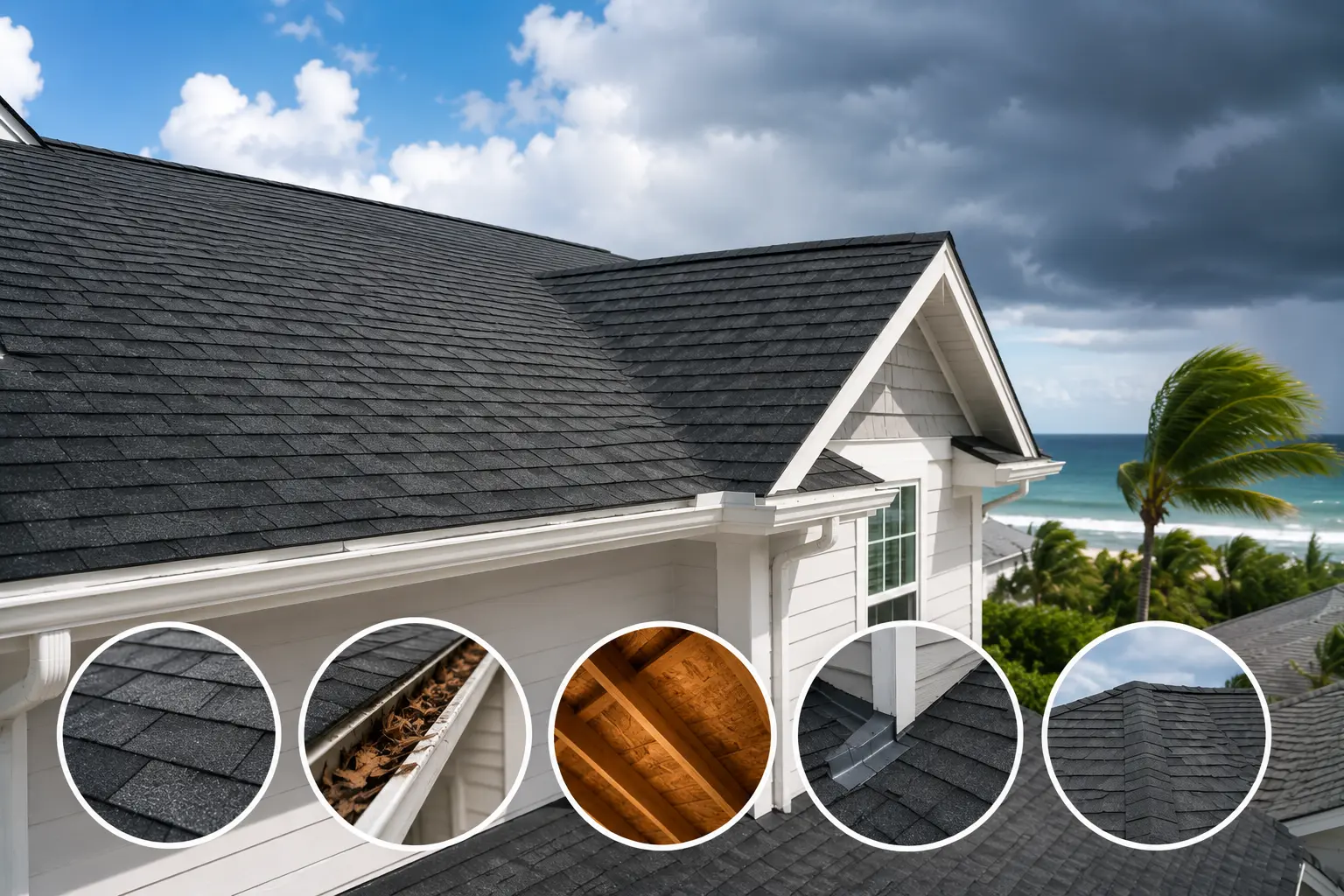
Shingles that curl at the edges, crack, or are missing entirely no longer form a continuous barrier against wind-driven rain. During a storm, wind can get underneath curled or lifted shingles and peel back entire sections of roofing. If you notice bald spots, exposed nail heads, or shingles in your yard after ordinary wind, it's a strong sign your roof's fastening system is failing.
Multiple or recurring leaks
One isolated leak is often a straightforward repair. But if you're dealing with leaks in more than one area, or the same spot keeps leaking after being patched, it usually means the underlying roofing system has broken down more broadly than a single repair can fix. Recurring leaks are one of the clearest signs that patch repairs have reached their limit.
A sagging roof deck
Sagging or soft spots anywhere on the roofline point to moisture that has worked its way into the decking itself, weakening the wood that everything else is fastened to. This is a structural issue, not just a cosmetic one, and it should be addressed before hurricane season rather than after a storm adds more load and water to an already compromised deck.
Granule loss and bald spots
Asphalt shingles are coated with granules that protect against UV rays and impact. As a roof ages, those granules wear away and collect in gutters and downspouts. Heavy granule loss leaves the asphalt layer exposed and brittle, which makes shingles far more likely to crack or tear loose in high wind.
If any of these signs sound familiar, it's worth getting a free inspection before storm season is in full swing. A quick assessment now can mean the difference between a planned replacement and an emergency repair in the middle of a hurricane.
Schedule a free inspection and we’ll give you a straight answer.