How to Choose the Right Roofing Material for Miami's Climate
Published July 2026 · Mia Roofers
Miami's climate is uniquely hard on a roof: intense UV exposure nearly year-round, high humidity, frequent heavy rain, and the constant possibility of hurricane-force wind. The roofing material you choose has a real impact on how well your home holds up, how much you'll spend on cooling, and how often you'll need repairs. Here's how the most common options compare for South Florida homes.
Asphalt shingles
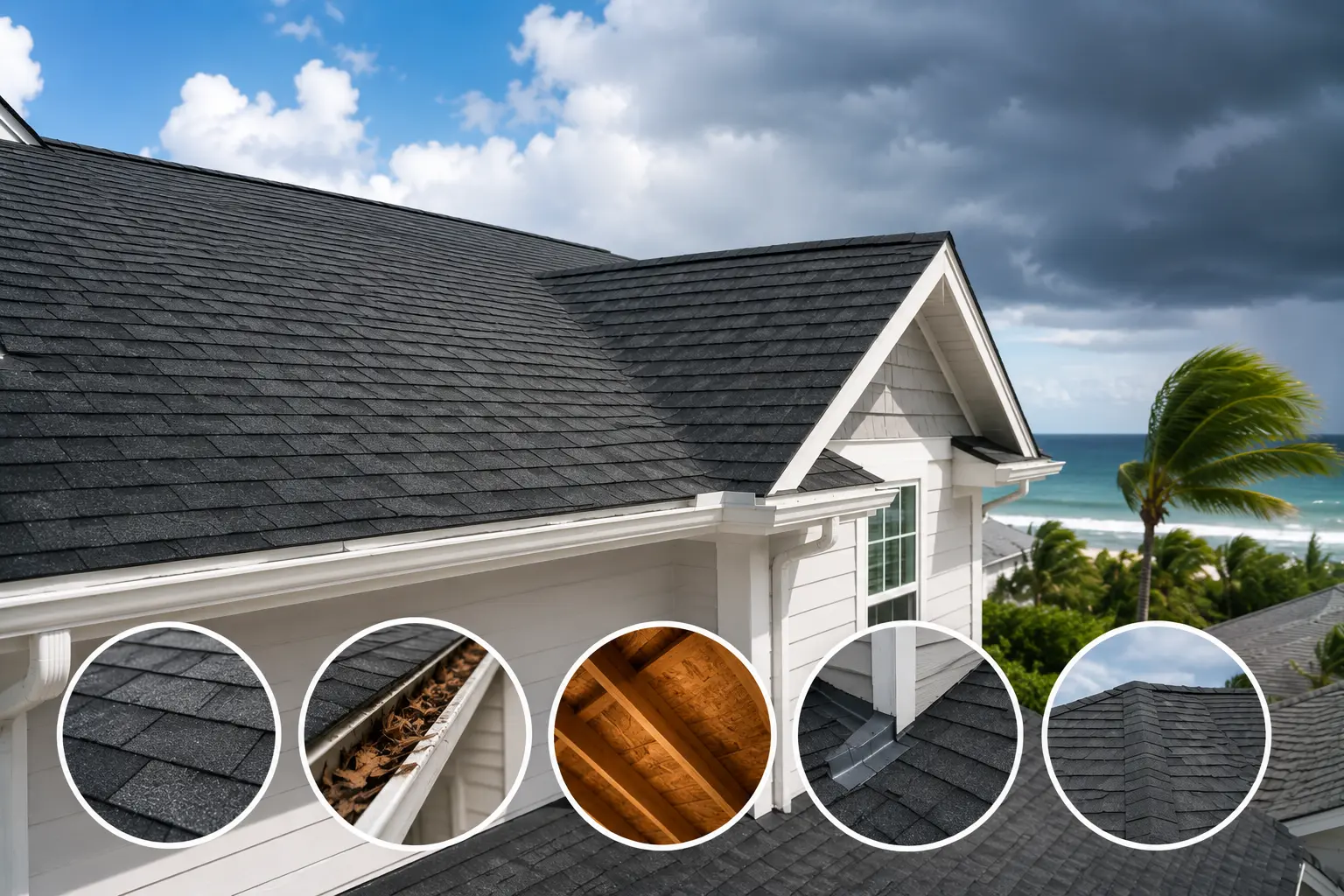
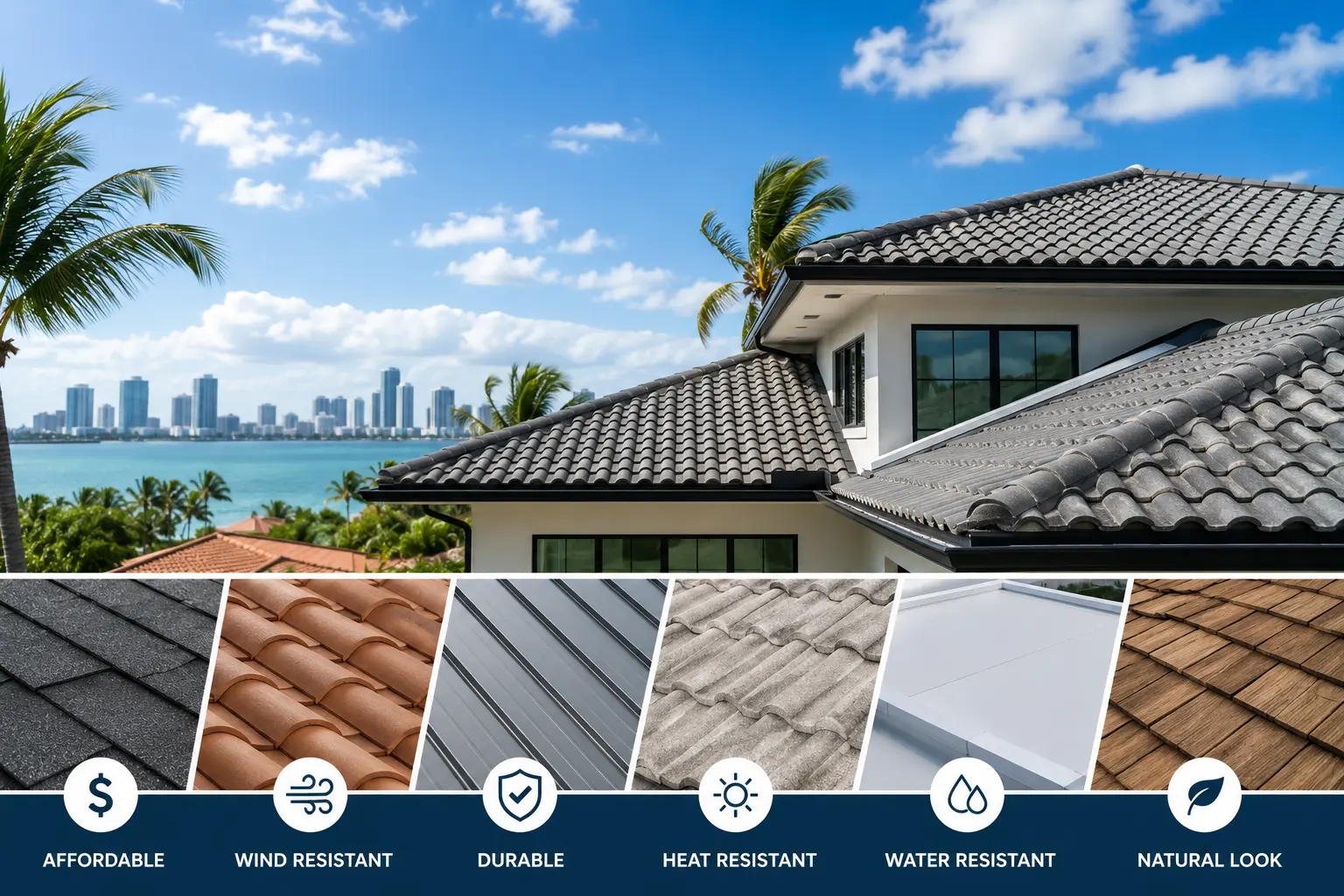
Asphalt shingles remain the most popular choice for residential roofs because they're affordable, available in a wide range of colors and styles, and quick to install. Modern architectural shingles rated for high wind uplift hold up reasonably well in Florida, though they generally have a shorter service life here than in milder climates due to constant UV exposure. They're a solid, budget-friendly option as long as you choose a high wind-rated product and keep up with maintenance.
Concrete and clay tile
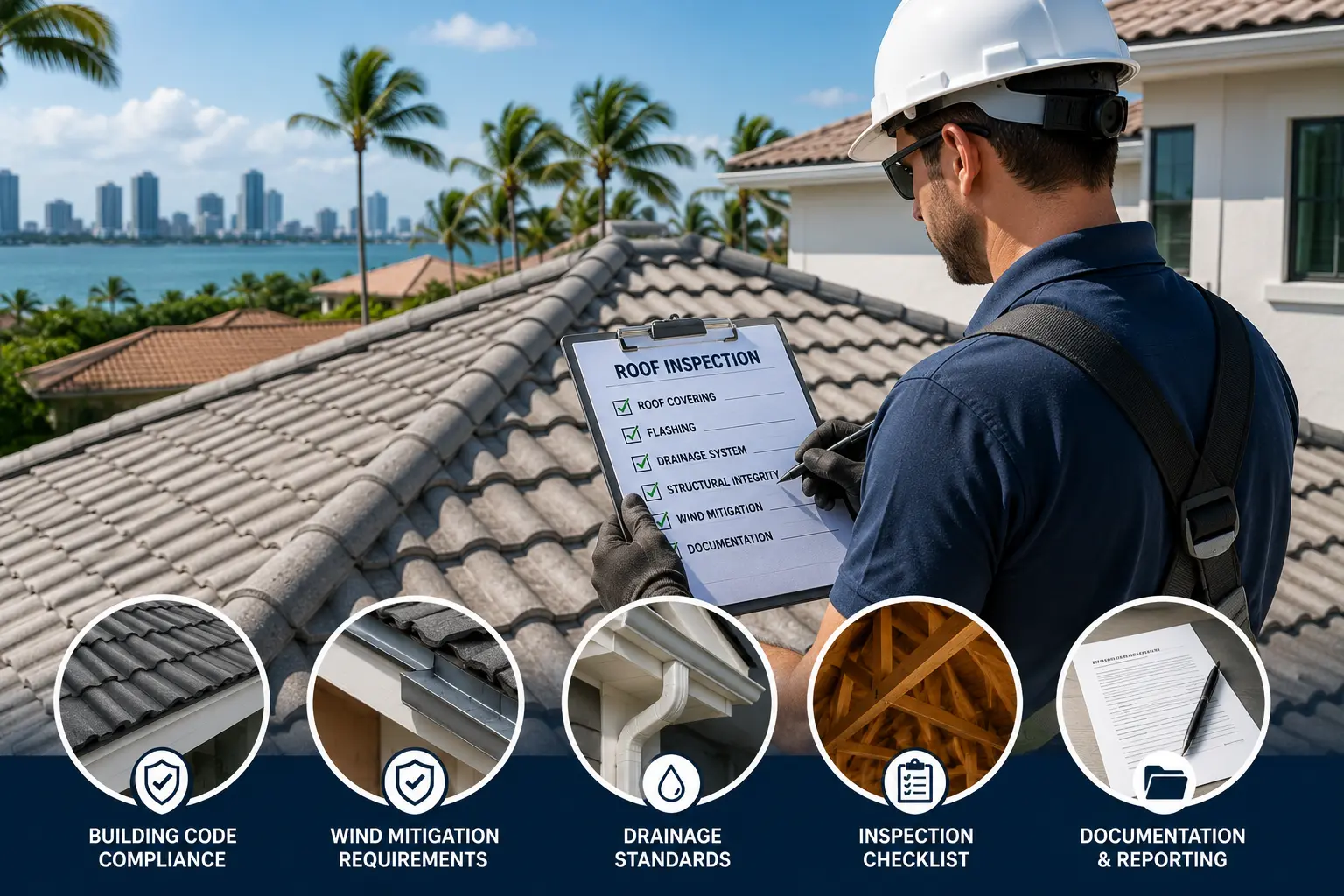
Tile roofing is a South Florida classic for good reason: it's extremely durable, handles heat well, and can last 50 years or more when properly installed and maintained. Tile is heavier than shingles, so it requires a structure built or reinforced to support the load, and individual tiles can crack from impact even though the overall system is very wind-resistant. It's a premium option that pairs especially well with Mediterranean and Spanish-style architecture common throughout Miami-Dade.
Metal roofing
Metal roofing has become increasingly popular for its excellent wind performance, long lifespan, and reflectivity, which helps reduce attic heat and cooling costs. Standing seam metal systems are rated for some of the highest wind speeds of any residential roofing material, making them a strong choice for storm-prone areas. The upfront cost is higher than shingles, but the combination of durability and energy savings often makes up the difference over time.
Flat and low-slope roofing
Many South Florida homes, additions and commercial buildings have flat or low-slope roofs, which use different materials entirely, such as TPO membrane or modified bitumen. These systems are engineered specifically for proper drainage and waterproofing on a low pitch, and installation quality matters enormously here, since a flat roof has far less margin for error when it comes to standing water.
Weighing your options
Beyond personal style preference, the right material depends on your roof's structure, your budget, any HOA or historic district requirements, and how long you plan to stay in the home. We walk through all of these factors during a free inspection and estimate, so you can choose a material that fits both your home and your budget with confidence.
Schedule a free inspection and we’ll give you a straight answer.